
Supply to Hong Kong Online|Global Vegan Trend Drives Plant-Based Foods to Become Hot Sellers in Hong Kong
2026-07-09Following marinaded seafood, fish with pickled mustard greens, and braised pork with preserved mustard greens, what will be the next mainland pre-prepared food category to transform from a "Mainland check-in hit" into a "Hong Kong daily staple"? Jade Premium's official website recently published an industry observation: the new generation of plant-based foods is evolving beyond "tofu and Chinese cabbage" into "More Variety, More Flavour, More Possibilities".
A new generation of vegetarian food is penetrating Hong Kong’s F&B market in a more niche, health-conscious form—and this time, it is the turn of plant-based vegetarian cuisine.
A New Essential Demand in Hong Kong Sustained by 2.5 Million "Flexitarians"
Many people's impression of Hong Kong's vegetarian scene remains stuck on "traditional Buddhist temple food, tofu, and plain cabbage". However, the data has long moved on:
Vegetarian Food Asia survey at the end of 2025: 75% of Hong Kong respondents already have vegetarian dietary habits, with two-thirds identifying as flexitarians.
- IPSOS data commissioned by Green Monday: The combined flexitarian and vegan population in Hong Kong surged from 24% to 34%, with over 2.5 million people in the city having vegetarian habits, alongside a significant increase in the female vegan population.
- In 2024, Hong Kong vegetarian takeaway orders exceeded 8 million, with an average spend per order over HK$85.
- Plant-based food retail sales in Hong Kong reached US$36 million in 2021, with a CAGR of 8% from 2022 to 2026, projected to reach US$46.5 million in 2026.
The driving logic is clear: Hong Kong’s hot and humid climate + health consciousness + ESG principles + mainland consumption feedback (plant-based coffee shops and modern vegetarian restaurants in Shenzhen and Shanghai have long been check-in hotspots for young Hong Kongers). However, local supply simply cannot keep up.
Dilemma on the Restaurant Side: Overly Single Vegetarian Menus
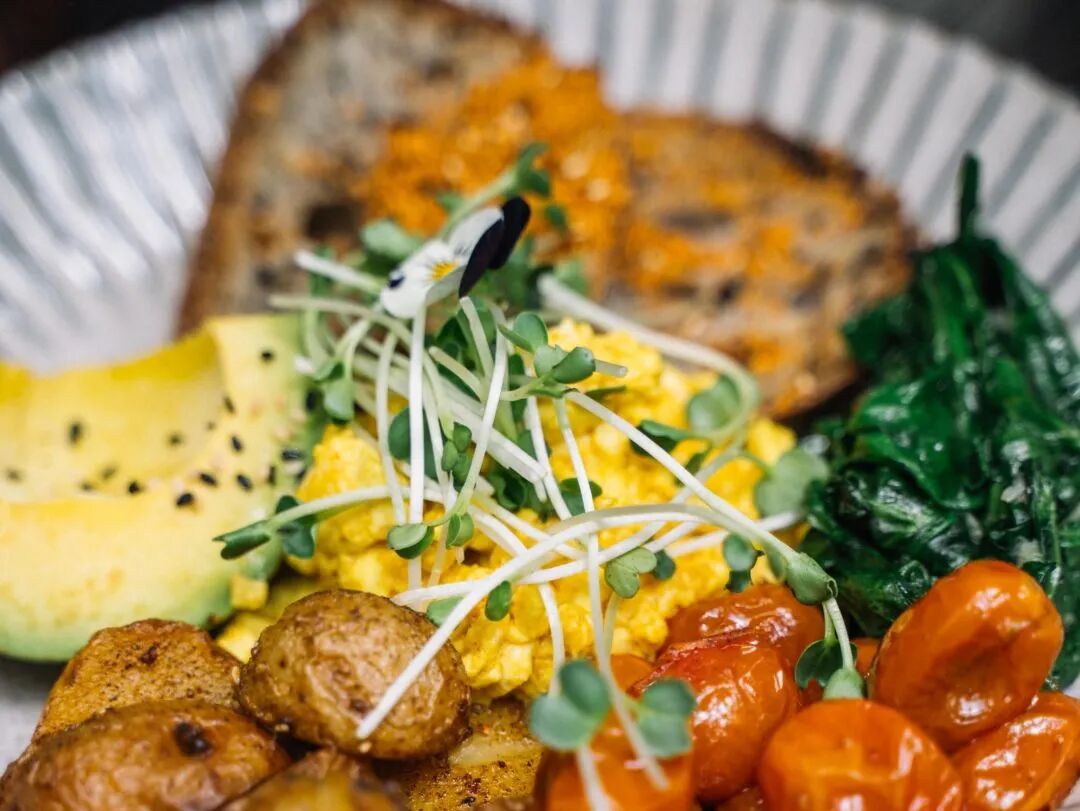
A survey during the same period by Green Monday in Hong Kong showed that among omnivorous consumers who regularly dine with vegetarians, 98% agree that dining out together poses difficulties—70% complain about "a lack of vegetarian dishes in restaurants", 60% complain about "a lack of information on vegetarian restaurants", and ultimately 78% of respondents wish restaurants would offer dedicated vegetarian menus.
Meanwhile, local freshly prepared vegetarian food in Hong Kong faces the following pain points:
- Scarcity of vegetarian chefs: Traditional temple-food master chefs face a generational gap, and younger chefs are reluctant to work in vegetarian kitchens.
- Limited raw materials: Imported plant meat is expensive, while local organic vegetable supplies fluctuate significantly.
- Difficulty in standardisation: Vegetarian cooking relies heavily on individual chef intuition—a shop known for making "great braised vegetarian dishes" cannot easily replicate its success across a chain.
When "flexitarian eating" has become the default dining habit for colleague gatherings and family takeaways, Hong Kong restaurant vegetarian menus remain stuck on the same old choices unchanged for a decade—cold wood ear fungus and poached choy sum. Mainland plant-based food suppliers understand better than local Hong Kong businesses how to fill this supply-demand gap.
What Does the New Generation of Plant-Based Food Look Like?
The Three "Mores" Provide the Answer
The core of the new generation of plant-based foods lies in three "Mores": More Variety, More Flavour, and More Possibilities. Having long moved beyond the single track of "mock animal meat", today's plant-based vegetarian foods have developed forms aligned with Chinese dietary habits, perfectly filling the Hong Kong market gap:
More Variety: From Mock Meat to Full-Scenario Coverage
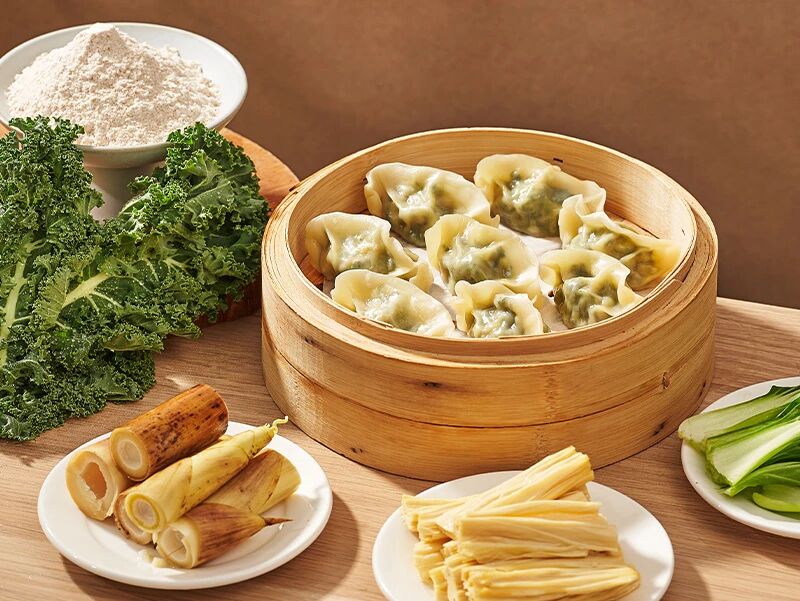
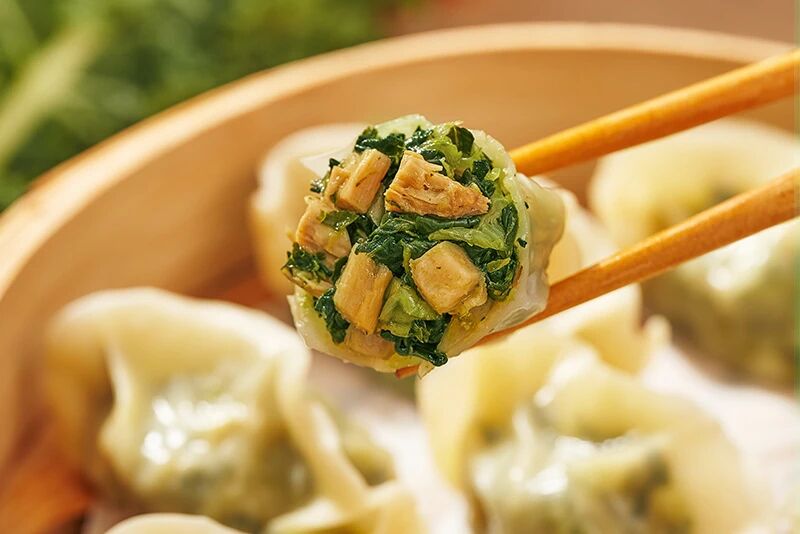
While plant-based products focused on "vegetarian steaks" and "vegetarian burgers" a few years ago, mainland supply chains have now expanded their categories to cover the full spectrum of Hong Kong's F&B needs. For plant-based pastries and dim sum, there are emerald vegetarian dumplings with cooked-dough wrappers made from three types of mushrooms and four types of vegetables, as well as shepherd's purse and golden tofu soup dumplings (xiao long bao). For hotpot and buffet scenarios, there are "cloud-like" sauce-absorbing cotton tofu, thousand-layer coconut tofu, and ancient-style free-poured frozen tofu. Even for pain points such as local cha chaan tengs (Hong Kong-style cafes) wanting to offer vegetarian crab roe tofu or vegetarian crab roe xiao long bao but failing to find a stable sauce supply, manufacturers have developed a vegetarian crab-flavoured sauce using monkey head mushrooms (lion's mane) as a base, successfully filling this market void.
More Flavour: New Chinese-Style Seasoned Vegetarian Food Rules the Market
The new generation of plant-based food is no longer about "mimicking meat", but about "tasting delicious". New-generation vegetarian dumplings feature fillings dressed with extra virgin olive oil; tofu comes in seaweed and coconut flavours; steamed buns feature savoury and fresh rattan pepper or Mapo flavours; even the vegetarian crab sauce leverages monkey head mushrooms to extract natural umami, recreating the smooth and tender texture of Shanghainese vegetarian crab roe. These profile choices fit seamlessly with the Shanghainese and Cantonese palates familiar to Hong Kong consumers, offering far better suitability than the "beany-tasting plant meat" from Western brands.
More Possibilities: From Vegetarian Specialty Shops to Mainstream Channels
In earlier years, plant-based foods were confined to specialty vegetarian outlets. Today, these products are breaking into Hong Kong’s mainstream retail and dining channels: pastry items that can be served after just 8 to 10 minutes of steaming meet essential demands for cha chaan teng vegetarian breakfasts and catering dim sum; sauce-absorbing tofu is a top choice for hotpot restaurants seeking differentiated SKUs; and ready-to-toss thawed konjac braised snacks perfectly cater to Hong Kong’s summer cold-food takeaway market.
Currently, mature mainland supply chain brands have achieved HACCP export qualifications for these products. Some SKUs are already undergoing trial sales in Hong Kong, attracting procurement interest from numerous Hong Kong supermarkets and restaurants.
The Trend Has Arrived: Time for Action
As the Hong Kong F&B reordering season for the second half of 2026 gets underway, coupled with the surge in health-conscious consumption and the adoption of ESG principles, modern plant-based vegetarian foods stand as the next hit pre-prepared food category capable of simultaneously penetrating Hong Kong's cha chaan tengs, buffets, convenience stores, and catering services. This is not merely about exporting a vegetarian product; it is about completing an essential jigsaw piece for flexitarian consumers in the Hong Kong F&B market.
For mainland plant-based vegetarian food manufacturers, leveraging the mature supply-to-Hong Kong channels established by Jade Premium makes it easy to navigate barriers such as certification compliance, channel connections, and cold-chain customs clearance, allowing direct reach into the end-user touchpoints of Hong Kong's international consumer market. An efficient cross-border food ingredient corridor from domestic production lines to Hong Kong dining tables has already been paved; the opportunity belongs to the pioneers who are first to bring "modern plant-based vegetarian cuisine" into Hong Kong kitchens.