
Domestic Stock Game, Overseas Incremental Market Taking Shape
2026-08-31 to 2026-09-01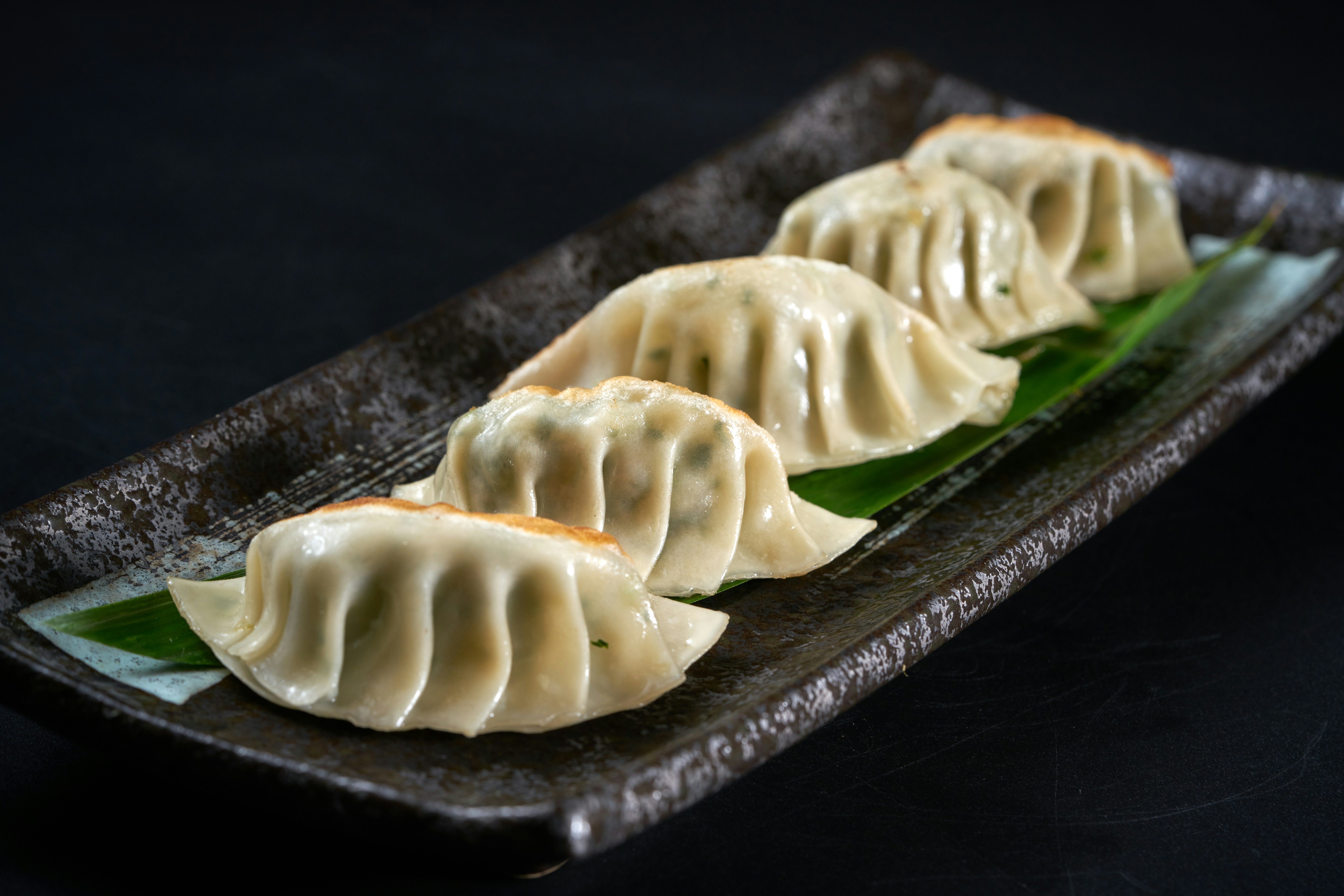
I. The freezer cabinets for frozen food in China are already packed to capacity.
Price wars have raged from the start of the year to the end. Hand-pulled pancakes offer more quantity for less money, dumplings are constantly discounted, yet price cuts have not spurred growth – they have only squeezed industry profits further. In 2025, several listed frozen-food companies reported rising revenue but falling profits, with some seeing net profit drops of over 30%. When even industry leaders start making losses, smaller manufacturers struggle to survive – the domestic market has shifted decisively from an incremental to a stock‑based game.
The essence of “involution” (neijuan) is that everyone is chasing the same piece of cake, competing with ever‑shrinking margins for ever‑dwindling new growth. That path leads nowhere.
Overseas, however, the picture is entirely different.
II. From “ethnic‑only” to a mainstream billion‑dollar market
In 2025, the global frozen dough‑based food market is valued at nearly US$4.2 billion, and is projected to reach around US$8.2 billion by the end of 2030, at a compound annual growth rate (CAGR) of approximately 6.8%. According to Data Insights Reports, even the single segment of frozen Cantonese dim sum was valued at US$7.04 billion in 2025 and is expected to nearly double to US$11.99 billion by 2033.
If you view this only as “Chinese people eating dumplings”, you are seriously underestimating the opportunity. Today, frozen Chinese snacks are tapping into the huge global trend of quick‑service, on‑the‑go food consumption. With an exotic flair and more nutritional value than bread, Chinese‑style pastries align perfectly with the rising plant‑based and vegan movements overseas. Behind the “Chinamaxxing” trend sweeping social media lies the vast potential of Chinese health‑oriented food products.
Some brands have already succeeded: a domestic frozen‑dumpling brand entered 149 Sam’s Club stores across 15 US states, becoming the first Chinese frozen‑food brand to achieve large‑scale distribution in Sam’s Club. Chive pockets (jiu cai he zi) were launched in Canada’s T&T Supermarket, selling nearly 40,000 units in the first week.
As one industry insider put it: “Frozen food is a stock market in China, but it’s an incremental market overseas. Expanding from a target consumer base of over a billion to seven or eight billion – going global may be the biggest opportunity for the frozen‑food industry in the next decade.”
III. What exactly is the overseas market buying?
1. Healthiness is the entry ticket
In 2025, the global plant‑based food market was valued at US$238.25 billion, with projections to reach US$256.64 billion in 2026 and US$491.24 billion by 2034, at a CAGR of 8.47%. At the same time, Europe and North America have large gluten‑free and vegan populations. Moreover, Western consumers are already accustomed to reading ingredient lists before purchasing – and a clean label is a non‑negotiable requirement for gaining access to mainstream retail channels.
2. Convenience drives repeat purchases
The rise in single‑person households overseas and the high cost of takeaway meals mean that “quick‑fix meals” are a genuine necessity. The reason Sinian’s Panda Buns attract long queues at Costco sampling stations is not just their cute appearance, but also the fact that they can be prepared by steaming or microwaving.

IV. Cold chain: the first make‑or‑break factor in going global, and the most underestimated cost item
Frozen prawn dumplings can traverse oceans and still maintain their translucent wrappers and “QQ” (springy) texture on foreign dinner tables – all thanks to robust cold‑chain technology.
Consider a real scenario: a carton of prawn dumplings sets off from Foshan and arrives in Los Angeles 30 days later. Along the way, it goes through container swaps, transhipment, and customs clearance waits. Any temperature fluctuation at any stage can cause the dumpling skins to crack and the filling to spoil. A single cold‑chain breakage means a total loss of an entire container load.
According to industry data, the maritime shipping period for frozen dim sum is typically 30–45 days, during which the temperature must be maintained below -18°C throughout. This is not a recommendation – it is a mandatory standard. Many companies think that renting a refrigerated container is enough, but once they start shipping, they discover that calibrating temperature recorders, coordinating container transfers, and ensuring power supply during customs clearance are all potential weak links. Cold chain is not just a logistics cost – it is an insurance premium. How much you are willing to spend to protect each carton of goods determines how confident you can be in your export venture.
V. 80% of negotiations fail at the first hurdle: compliance is the true invisible wall
The market may be buzzing, but going global is not as simple as loading containers onto a ship. Industry observations suggest that roughly 80% of initial export negotiations fail to convert into actual orders due to compliance issues.
To export frozen food to the US, products must remain frozen and temperature‑control records must be kept for inspection; ready‑to‑eat items require specific testing for Listeria, and packaging materials must meet FDA certification. Exports to the EU require establishing an HACCP system and registering with the TRACES system. For the Middle East and Southeast Asia, HALAL certification is required, and composite food products containing meat must also obtain import approval from the relevant local authorities in the destination country.
HS code classification, label language, allergen declarations, nutrition fact panels – if even one detail is wrong, the entire container may be detained. No matter how good your product is, if it cannot clear customs, it is all for nothing.
VI. From capacity export to brand export – what is still missing?
Chinese frozen dim sum does not lack production capacity, flavour, or even product innovation.
What it truly lacks is the ability to link products, compliance, cold chain, and distribution channels into a complete end‑to‑end export pathway.
Going global is not an adventure; it requires a clear roadmap: first choose your target market, then set standards, adapt your products, obtain certifications, build cold‑chain capabilities, and find distribution channels – each step is indispensable.
Jade Premium International specialises in full‑service food‑export solutions: compliance advisory for target markets, international certification planning, end‑to‑end temperature‑controlled logistics, and precise matchmaking with overseas buyers. If your factory has capacity and products, but you are still struggling with which market to enter, which certificates to obtain, or who to sell to – we welcome your enquiries.